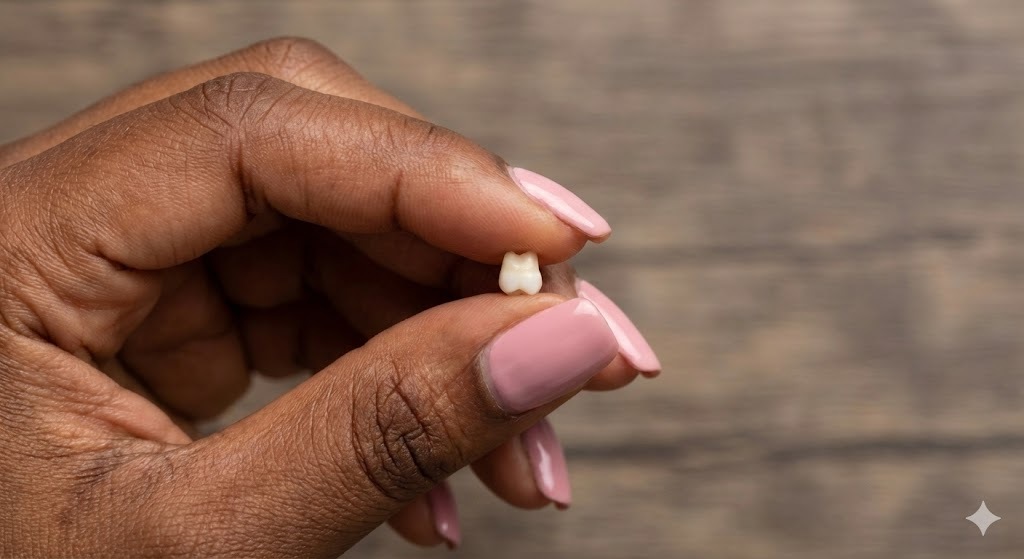
My daughter lost her tooth on Christmas Eve.
Looking back, the shift started the night before. When we went to bed that night, she had looked at me and said, "sweet dreams"; not "dim dims," the phrase we were so used to. I said "sweet dreams: back and called her dad to talk about it because I felt physical pangs of loss. What was happening to our sweet, adorable little girl?
From dim dims to sweet dreams and then the loss of the first tooth; all these things signaled that our daughter was changing. She was growing.
She is no longer the little girl we were used to.
And this is the thing about change: even when it is good change, we hate it.
We resist it. We mourn it. Even when the change means our children are healthy and thriving, or our career is advancing, or we are stepping into a better version of ourselves; a part of us wants to dig our heels in and stay where we were.
Why do we do this? Why does the brain treat growth like a threat?The neuroscience of "dim dims"
Our brains are wired for homeostasis (a fancy word for keeping things steady.) To your brain, the known is safe. The unknown is dangerous.
When my daughter said, "dim dims," my brain categorized that as normal, safe and routine. When she switched to "sweet dreams," my brain registered a disruption. The pattern broke.
Psychologically, every change involves a micro-death. To welcome the growing girl, I have to say goodbye to the toddler. To accept the promotion, you have to let go of the comfort of your old role. We don't just resist the new; we grieve the old.
Why we resist even the good stuff
Loss of control: Change happens to us. Even whether we initiated it or not; the ripple effects like a loose tooth or a new vocabulary are out of our hands.
The endowment effect: We overvalue what we currently have because it is ours. We cling to the "dim dims" because it is familiar and not necessarily because it is better.
Fear of competence: The old version of me knew exactly how to parent a toddler. The new version of has to learn how to parent a child. New levels require new skills, and that feels vulnerable.
How to cope with the ache of growth
If you are navigating a transition right now; whether it’s a child growing up, a relationship shifting, or a career pivot, here is how to handle the resistance:
1. Name the grief: It is okay to feel sad about a happy milestone. Acknowledging that you miss the old days doesn't mean you are not grateful for the new ones. Give yourself permission to mourn the chapter that is closing.
2. Use the power of 'and': Replace "but" with "and." I learned this from the Positive Intelligence programme. Instead of: "She is growing up, but I miss her being little." I tried instead: "She is growing up, and I miss her being little." Both truths can exist. You can be proud and sad at the same time.
3. Create a ritual: Rituals tell the brain, "We are crossing a bridge now." When the tooth fell out, we celebrated. The tooth fairy visited my daughter that night and when we woke up she was very excited to share how she will buy a blue and pink 'dollie' with the gift she got from tooth fairy. This marked the moment.
If you are changing jobs or moving houses, create a small ceremony to close the door on the old and open the door to the new.
4. Trust your adaptability: Remind yourself that you have changed before. I reminded myself that I survived the transition from crawling to walking. You have survived the transition from student to worker, from single to partner. The pang you feel is growing pains.
The gap in my daughters smile is new, and it is beautiful. I still miss "dim dims," and I am learning to love "sweet dreams" just as much.
Change is the only evidence of life. Let us stop resisting it and start witnessing it.