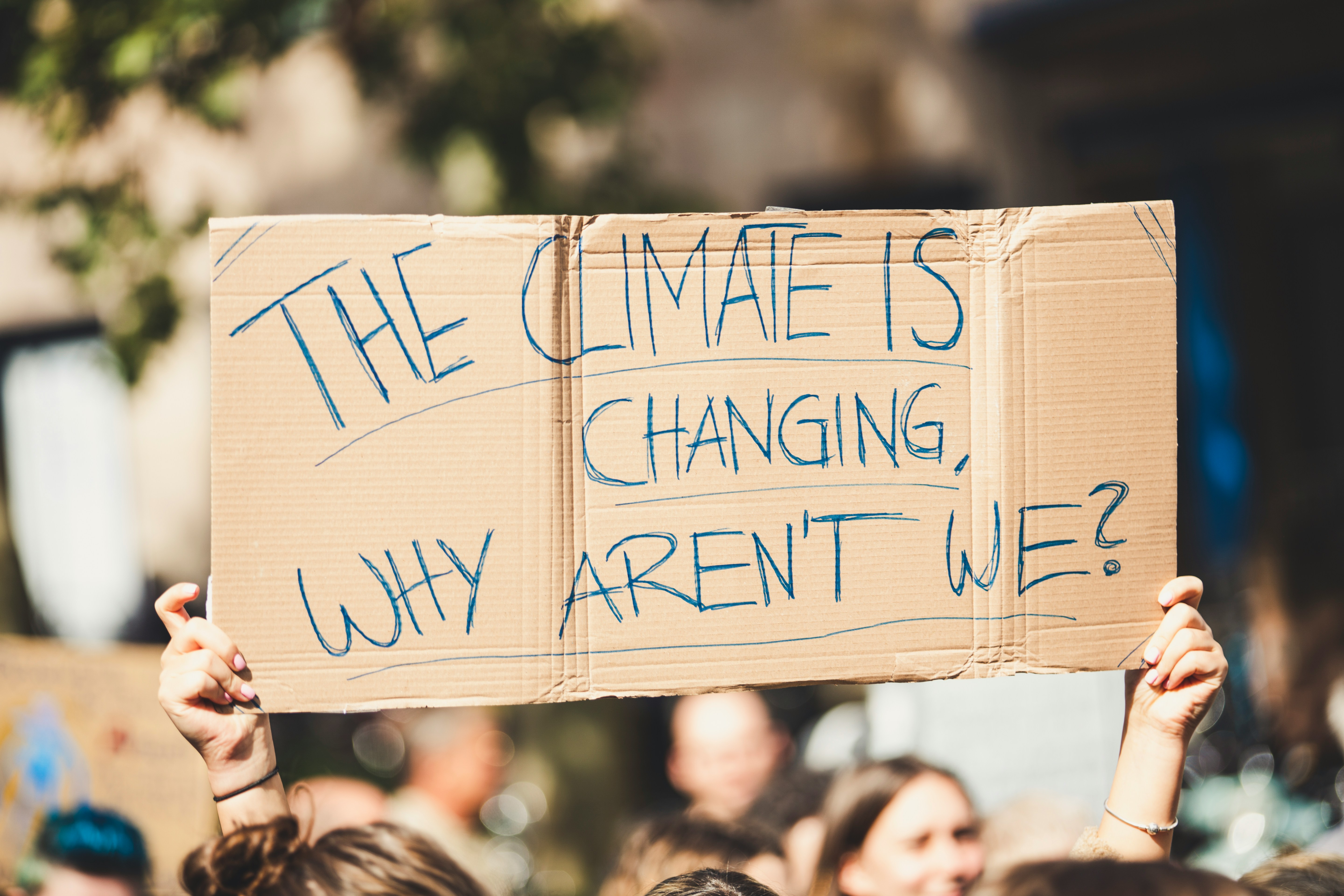
Yesterday as we marked Earth Day , the global conversation naturally turned to the physical state of our planet. In fact this year's theme, Our Power, Our Planet emphasized collective action, community mobilization and the role of individuals in defending environmental protections, accelerating the transition to clean energy and ensuring a sustainable future.
When we think of climate change, we often talk about carbon emissions, deforestation, rising sea levels, and the desperate need to transition to renewable energy. These are critical conversations. In fact, although this years theme was the same as for Earth Day 2025, the focus has shifted from pledges to direct participation, encouraging individual action.
But there is an equally urgent crisis happening beneath all this, one that is rarely discussed on international climate panels, yet it impacts our minds, our bodies, and the future of our communities. Mental health. The climate crisis is, unequivocally, a mental health crisis.
Nowhere is this stark reality more evident than right here in Kenya. For us, the environment is not an abstract concept; it is our lifeline. Agriculture is the backbone of our nation, contributing 22.5% to our Gross Domestic Product (GDP) and employing over 40% of our total population. For our rural communities, that dependency jumps to over 70%. Our relationship with the earth is very personal and in fact practical.
So, what happens to the human mind when the land can no longer sustain the people?We do not have to guess. The data is already here, and it is devastating. A report released in March 2026 by the Integrated Food Security Phase Classification (IPC), corroborated by the National Drought Management Authority (NDMA) and CARE, confirms a terrifying reality: the severe drought that gripped the northern Kenya before the current rains, had pushed 3.3 million people into high levels of acute food insecurity. This represents a staggering 52% increase in just one year.In places like Dadaab, which hosts one of the largest refugee populations in the world, severe hunger was reported as affecting 54% of the residents. Daily water rations were halved to just 10 liters per person.
When families watch their livestock die in the dust, when their crops fail for consecutive seasons, and when they are forced to cut their daily meals just to survive, the toll is not just economic or nutritional. The psychological devastation is immense.
To understand this, we must look beyond the present to future generations. A recent groundbreaking new framework in public health categorizes these climate-driven events as Environmentally driven Adverse Childhood Experiences (E-ACEs) (Thapa et al., 2025). Historically, public health experts have understood that Adverse Childhood Experiences (ACEs) such as abuse, neglect, or household dysfunction; cause chronic stress and other harm that permanently alters a child's brain development.
Today, researchers are applying that same clinical lens to the environment. Extreme climate events are not just physical threats; they act as severe, traumatic stressors. For children and families, the displacement, poverty, and food insecurity triggered by climate disasters create chronic, toxic stress. This prolonged stress dysregulates the hypothalamic-pituitary-adrenal (HPA) axis (the body's central stress-response system).
It disrupts the developing brain and dramatically increases the risk of long-term anxiety, severe depression, and post-traumatic stress disorder (PTSD). We are not just losing crops to the drought; we are risking the psychological foundation of an entire generation.Beyond marking Earth Day, we have to shift our perspective. Protecting the environment is inextricably linked to protecting our psychological well-being. We cannot afford to view climate change and mental health in silos. Which begs the question "How do we build resilience when facing monumental environmental challenges?
The latest clinical and sociological research points to several strategies that must be implemented across various levels of society:
At the Individual and Family Level
First, we have to acknowledge the stress. Climate anxiety is a real, valid, and increasingly common psychological response. Acknowledging the grief associated with lost livelihoods or extreme weather is the necessary first step in processing it. Furthermore, strengthening family cohesion is important. Strong, supportive family bonds act as a buffer, shielding children from the worst impacts of stress during times of climate-induced instability.
At the Community Level
Resilience is rarely built and cannot be built in isolation. It must be a it is built collective effort. Transformational resilience occurs when communities come together to create social safety nets. Engaging in microfinancing groups, learning and implementing sustainable agriculture practices such as agroforestry, and diversifying income sources can significantly reduce the economic stressors that exacerbate mental health struggles. Additionally, communities that establish local, peer-led mental health support networks recover much faster from environmental shocks. Sharing the psychological burden within local support structures can foster collective healing.
At the Socio-Structural Level
Finally, we need systemic change. We have to demand trauma-informed climate policies. Governments and NGOs should integrate mental health support into their disaster response and climate adaptation plans. Rebuilding physical infrastructure after a flood or drought is not enough; we have to intentionally rebuild the psychological safety of the affected populations.
On our podcast and in celebration of Earth Day 2026 we dove deeper into the intersection of agriculture, climate change, and mental health, as we officially released Episode 2 of Iyashi Conversations. I sat down with Tabitha Nekesa, a brilliant Land and Water Management Expert, researcher, upcoming farmer, and passionate advocate for sustainable land management, to discuss the often-overlooked realities of farmer mental health. Tabitha brought great insight into how agricultural solutions can support the psychological well-being of the people feeding our nation.
Tune in to the episode today on our YouTube Tunnel or on the link on our website. Let us broaden the conversations beyond Earth Day and let us include our mental health as we navigate our rapidly changing planet.