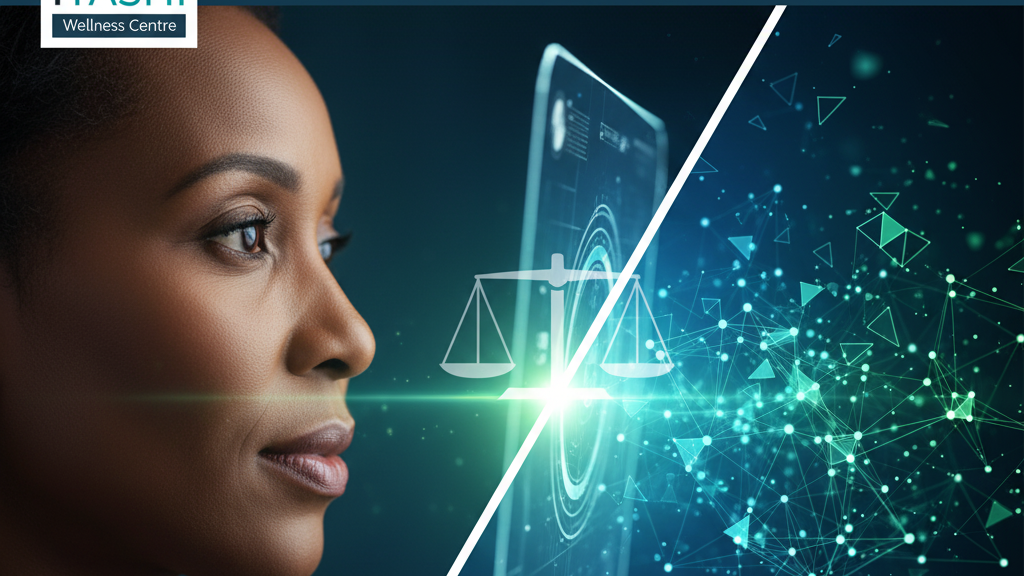
Navigating Clinical Practice in the age of AI for Kenyan mental health professionals
The rapid rise of Artificial Intelligence is reshaping the landscape of professional practice across every sector, and mental health is no exception. As a clinical psychologist and public health professional in Kenya, I believe this moment presents opportunities and responsibilities for our community of practitioners.
Drawing on dialogues from the American Psychological Association and insights from leading experts, this article explores how mental health professionals in Kenya can navigate the AI frontier, ensuring that technology serves our mandate to provide compassionate, effective, and equitable care.
A Call for Accountable Integration
AI tools offer efficiencies ranging from automating administrative tasks to assisting with data analysis. Some can even provide preliminary diagnostic support or personalized therapy suggestions . We must proceed with caution and an ethical compass.
Our work to provide human connection, empathy, understanding can be augmented by AI but AI can never truly replicate it.
Below are some guides.
"If you are the one using AI, you have the responsibility to make sure it is upholding the same ethics as the traditional practice of psychology" says Allison Funicelli and Cara Staus. Every AI tool we consider for clinical use in Kenya must be rigorously vetted for privacy and data security. Ensuring client confidentiality and data protection should be based on professional and legal standards such as the Kenya's Data Protection Act.
Verify that the AI-driven interventions or assessments you are using have empirical support and are culturally appropriate for our population. Actively interrogating the data AI models were trained on will ensure that we do not perpetuate or exacerbate algorithmic biases based on race, gender, socio-economic status, or cultural background. This could lead to misdiagnosis or ineffective interventions for clients.
AI should always function as a sophisticated tool in the hands of a skilled clinician, not a second-guessing autonomous agent. Human oversight and accountability is non-negotiable meaning that clinicians must continuously monitor AI outputs and never blindly accept recommendations.
Clients must be fully informed and give consent regarding any AI involvement in their care. The role of AI should be clearly explained. You as the practitioner retains ultimate ethical and legal accountability for all clinical decisions and client outcomes, regardless of AI input. We must prevent a situation where technology obscures us from taking responsibility.
We must resist the urge to let technology dull our clinical judgment and empathy. AI can analyze vast datasets and identify patterns, but it cannot replicate our clinical understanding and judgement. The ability to grasp individual human experience, context, and unspoken cues is what makes for therapeutic alliance. Therapeutic rapport is built on trust and human connection.
Moving From Awareness to Practice
For mental health professionals in Kenya, navigating the AI frontier demands our proactive engagement, not passive observation. The key lies in:
Staying informed about AI advancements, best practices, and ethical guidelines. Lets invest in continuous learning.
Actively participating in the design, testing, and implementation of AI tools that are culturally relevant, equitable, and effective for our local context. What are the opportunities for collaborative development?
Championing policies and regulations that safeguard clients and uphold ethical standards in AI-driven mental health services. Advocacy at the heart of our work.
Let us move from awareness to allegiance by standing with our clients and communities to ensure technology is used to empower and uplift humanity, not diminish our capacities or exacerbate inequalities in care.
What are your thoughts on integrating AI into mental health practice in Kenya? How are you preparing for this new frontier? I'd love to hear your perspective and insights in the comments below.
About the Author
Emily Mbelenga is a Clinical Psychologist and Public Health professional based in Kenya. As the Founder of Iyashi Wellness Centre she is dedicated to fostering mental health and promoting ethical, human-centered approaches to health in a rapidly evolving world. Her work focuses on evidence-based strategies to build resilience, enhance corporate wellness, and navigate the intersection of technology and mental health.
If you found this article insightful and are passionate about ethical AI use, mental health advocacy, or workplace wellness, I invite you to connect with me here on LinkedIn and follow Iyashi Wellness Centre Wellness Centre for more insights and resources. Let's build a healthier future together.