On Saturday, Nairobi will be painted red. The flowers will be delivered to offices, the dinner reservations in Westlands will be fully booked, and social media will be flooded with curated displays of affection. If you are in a relationship, Valentine’s Day is a celebration. But for the heartbroken and those navigating the aftermath of a separation that happened as far back as 2024, or even 2023; Valentine's Day can be a day full of mixed emotions including shame.
In my clinical practice, I hear the same self-recrimination over and over again. A client will sit across from me, looking exhausted, and whisper,
It has been six months. I should be over this by now. What is wrong with me?
Society, and perhaps your well-meaning friends, have given you an arbitrary deadline. You are told "ni kuoga na kurudi soko", that a strong doesn't grieve, they dust themselves up, join a gym, deletes the photos, and gets back "on the market." But psychological science tells a radically different story.
How 'un-loving' actually works
A groundbreaking longitudinal study by Chong & Fraley (2025) has finally put empirical data behind the process of romantic detachment. The researchers tracked the transfer of attachment functions and did not just measure sadness.
In attachment theory, a partner is not just a lover; they are a biological anchor. They serve three functions:
The person you want to be near.
The person you mentally reach for when you are distressed or afraid.
The foundation that allows you to explore the world.
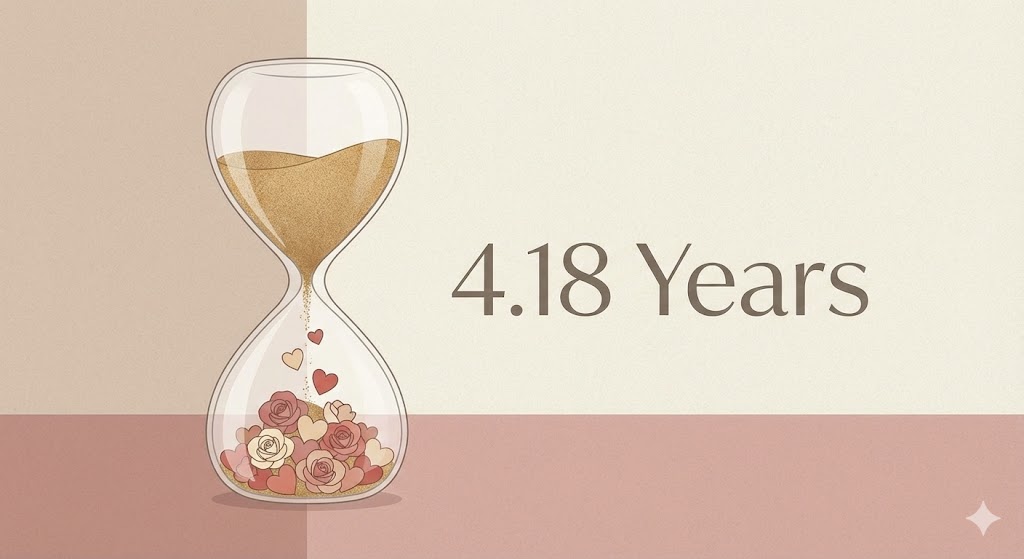
When you break up, you not only lose a boyfriend or girlfriend; you lose your regulation system. The study found that while we might stop dating someone quickly, it takes the brain an average of 4.18 years to relinquish an ex-partner as an attachment figure.
Let that number sink in. 4.18 years.
This means that if you broke up in 2023, and you still feel a phantom reach for them when you receive bad news, or you still compare every new date to them, you are not obsessed. You are not weak. You are just human. You are on a biological timeline that doesn't get rushed by societal expectations.
Why it feels harder in this era
In the dating scene, this process is often complicated by new social dynamics. We are currently living through an epidemic of undefined relationships—the situationship.
Psychologically, ambiguity prolongs grief. It is difficult to mourn a loss that was never officially acknowledged. When we end a "we were just talking" phase, the lack of a clear label denies us the social license to grieve.
How do you explain needing to mourn a situationship?Inexplicable as it might sound, the attachment bond formed in those six months of intense intimacy is as real to your brain as a more committed relationship. In addition, we live in a culture that prioritizes "maturity" and "keeping the peace." Often, we are pressured to remain "just friends" immediately after a split and to avoid awkwardness in our social circles.
The research however indicates that continued contact is the single greatest predictor of stalled recovery.
The "just friends" trap is a neurological nightmare. You cannot reorganize your attachment hierarchy while you are still texting the person who sits at the top of it. Every check-in text, every view of their WhatsApp status, resets the clock. It keeps the attachment system chronically activated but unfulfilled; a state of physiological stress.
The stuck factors
The study also noted that individuals with an anxious attachment style take significantly longer to detach. If you are someone who craves closeness and fears abandonment, the loss of a partner feels like a survival threat. Your brain will fight to keep the bond alive, even if the person is gone, through rumination or idealizing the past.
If this is you, the shame of "taking too long" only adds a secondary layer of suffering.
A prescription for Valentine’s Day
So, as we approach February 14th, I want to offer a clinical reframing.
If you are still hurting over a relationship that ended years ago, stop beating yourself up. You are not failing at recovery; you are likely right in the middle of a very normal, 4-year neurobiological restructuring.
Healing is not a race to the finish line; it is a reconstruction of your secure base. It involves learning how to soothe yourself again, how to turn to new people for safety, and how to stand in the world without the person who once anchored you.
Give yourself grace this Saturday. If you need to mute their stories, do it. If you need to decline the Galentine’s brunch because you are not up for performing happiness, do it.
Your timeline is yours. And according to science, you have plenty of time.