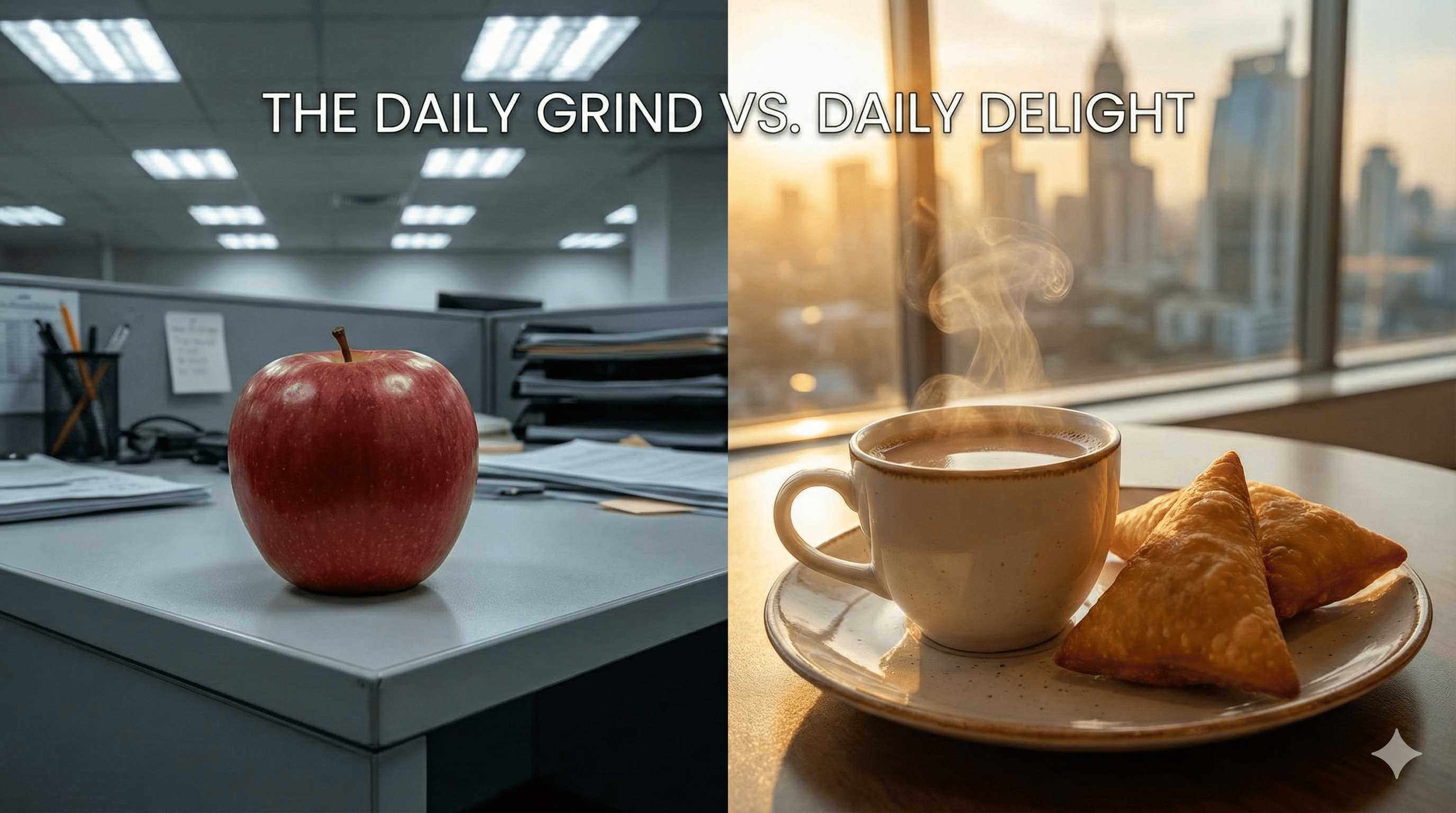
We are five days into February. By now, 80% of the New Year's Resolutions we made in January 1st have quietly died. The gyms are once more empty. The healthy eating plan has been replaced by office tea-and-mandazi. The book you were supposed to start reading is gathering dust on your bedside table.
When this happens, we beat ourselves up about it. We tell ourselves, "I am just lazy" or "I lack discipline."
A fascinating profile of psychologist Wendy Wood in the Monitor on Psychology (2026) suggests we have it all wrong. The problem is not your motivation. The problem is your context.
The myth of conscious choice
Wood’s research reveals a startling statistic: roughly 43% of our daily actions are habitual. That means nearly half of what you do every day whether scrolling your phone or the route you drive to work; happens on autopilot. It happens without your conscious brain even being involved.
Think about typing. You can type a WhatsApp message at lightning speed.( I know I do this and many of my friends often comment about my lightning speed typing skills :)).
If I asked you to name the keys on the second row of your keyboard, you would struggle. Your fingers know, but your brain doesn't. That is a habit.
Why motivation fails
We love the hustle culture narrative. We believe that if you just push harder, wake up at 4 AM, and grind, you will succeed. But Wood argues that willpower is a finite resource. You can force yourself to eat a salad for lunch once. But if your office canteen only sells chips and sausage, and your colleagues are all eating chips, eventually, your willpower gets tired. This is why workplaces have to be conscious about workforce nutrition.
Think about the layout of a standard cafeteria. If the first thing you see when you walk in is a display of mandazis or a soda fridge, your brain has to actively decide to ignore them to get to the water. That decision costs mental energy. In public health, we call this 'choice architecture'. It is the invisible design of the environment. For example, if we moved the fruit bowl to the checkout counter and hid the sodas behind the serving line, consumption patterns would shift without anyone feeling deprived. By doing so, we are redesigning the flow so that the healthy choice becomes the path of least resistance. If you have to walk to a different floor to get a soda, you will likely drink the water on your desk simply because it is there.
The habit wins because habits are lazy. They follow the path of least resistance.The friction strategy
So, how do we change?
Wood suggests we stop trying to change our minds and start changing our environment. We need to manipulate friction. To break a bad habit, increase friction.
For example, if you spend too much time on Instagram, don't just say "I will stop." Delete the app. Or turn your screen to grayscale. Make it annoying to do the bad thing.
When it comes to healthy phone habits, we have to realize that we are fighting an uphill battle. Silicon Valley tech giants understand the science of friction better than anyone, and they use it against us. They hire Ph.D. psychologists to remove every micro-second of friction between you and their app.
Netflix has auto-play so you do not have to make a choice to watch the next episode; you just have to not stop it. Your social media has an infinite scroll, to remove the stopping cue that tells your brain to take a break. They have designed a frictionless slide into consumption.
To reclaim your time, you must intentionally re-introduce the friction they worked so hard to remove. Log out of the app after every session so you have to physically type your password next time. Those extra 15 seconds of annoyance are often enough for your rational brain to kick in and ask, 'do I really want to do this?'
This applies to our workplaces too. Often, organizations rely on inspirational talks to change culture. They hire a speaker to tell staff to 'take ownership' and yet, two weeks later, nothing has changed. It is also the same reason why the annual corporate wellness week rarely leads to lasting burnout reduction.
Why?
We bring in a fitness instructor for an hour on Friday or offer a free fruit basket, but the system; the 12-hour workdays, the unclear reporting lines, and the culture of answering emails at midnight remains exactly the same. The context (the culture of overwork) overpowers the intervention (the fitness class) because the system (the context) remained the same. Real organizational change is about the invisible architecture of how work gets done and not about events or inspirational speeches.
If you want a healthy team, you don't need more motivational speakers; you need clearer job descriptions and frictional boundaries that make it difficult to send emails after 6 PM.
If you want employees to collaborate, but you seat them in isolated cubicles and reward individual KPIs, no amount of motivation will make them good teammates.
As we settle into the year, stop fighting yourself. Stop trying to will yourself into a better life. Instead, look at your environment.
Are you designing a life where the good choice is the easy choice? Because in the battle between willpower and environment, the environment wins every time.