This week founder’s reflection was triggered by a Netflix series I watched in January though the series itself was released in 2019. (Yes, in between building, I do take some time for self care. Including currently where I am on holiday)
Back to the series What/If
It is about a brilliant but cash-strapped female founder of a biotech startup who is on the verge of losing everything. In a desperate bid to save her company, she receives an offer from a mysterious venture capitalist: she will get the full funding she needs, but in exchange, the investor gets one night alone with her husband. You will have to watch the series to know how it all ended.
This provocative series really made me wonder. As founders... yes, we have our dreams that we believe in and we want to bring to fruition. But do we want to win no matter what? How far is too far? In the show, the trade seems extreme. It really is Hollywood drama at its best.
Are you able to stop yourself from making a catastrophic decision like Lisa and Sean who traded their seeming perfect marriage for funding? But of course, there were other deeper underlying issues which is why you need to watch the series to find out for yourself.
That said, right here in the corners of Nairobi’s co-working spaces and boardrooms, founders are making trades every day. They may not be trading their spouses for a cheque, but they are trading their sleep, their sanity, their ethics, and sometimes, tragically, their lives.
The entrepreneur’s blind spot
There is a psychological state that every founder knows too well. The moment when the vision becomes so consuming that the self disappears. We stop being people who run businesses, and we become the business itself.
When the business is dying, we feel we are dying. When the cash flow dries up, our self-worth evaporates.
In 2025, I walked through my own valley of shadows. I found myself tumbling through liquidity crunches, negotiating survival money, and facing the terror of potentially losing what I had built up to that point in my life. Looking back, I see the blind spot clearly: I had conflated my survival with Iyashi’s survival.
When you are in that zone, your decision-making creates a tunnel. You stop seeing the collateral damage. You justify small compromises—missing a child’s milestone, ignoring a health warning, taking money from a misaligned partner—because "the mission" demands it.
We cannot talk about this without acknowledging that sometimes this pressure ends in tragedy. In late 2025 a brilliant Kenyan founder died by suicide. While I don't know the specifics of that tragedy, it was and still is a heartbreaking story. A story of a founder who felt there was no exit door other than the ultimate one. It is a story of pressure so great that it must have fractured the resilience for which founders and entrepreneurs are known for.
We a living in a world which really celebrates the hustle culture. We applaud the sleepless night but we rarely talk about the moment when the resilience turns into rigidity. When we are holding on so tight that we snap.
For me, the lesson from What/If was not just about a bad marriage bargain; it was about the lack of boundaries. Lisa and Sean thought they were strong enough to handle the "unthinkable." They were not None of us are.
To survive this journey, we have to define our non-negotiables before the crisis hits.
Is the funding worth it if it requires you to lie to your stakeholders?
Is the growth worth it if it costs you your marriage or your relationship with your children?
Is the valuation worth it if you have to medicate yourself just to get through the day?
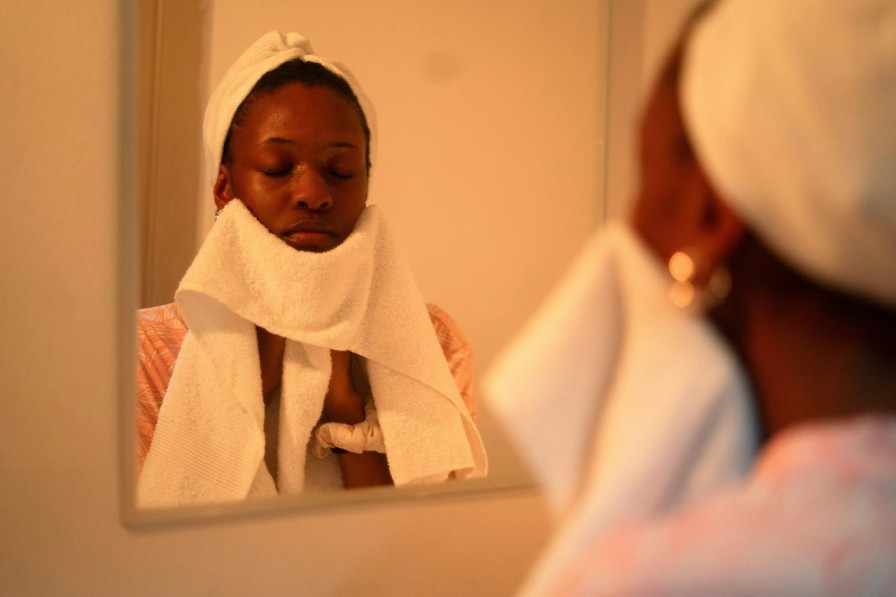
As we get into quarter 4 of 2026 and are gaining momentum in building Project RISE and expanding Iyashi, I am so aware of the importance of doing things differently. I am learning that I am the asset, the golden goose. If I break, the vision breaks. I am improving my ability to always look at myself in the mirror and to always recognize the person staring back at me. And to know that when I cannot recognise her, then I am moving into dangerous territory.
Knowing who aligns with your vision is important.
True success is not just the exit strategy or the IPO.
It is the ability to look at yourself in the mirror after the deal is signed and recognize the person staring back at you.
If you are reading this and you feel like you are in the tunnel; if you feel like you have to make a choice that violates your soul just to keep the lights on.........please stop. Breathe. Reach out.
There is no company, no 'unicorn' status, and no funding round that is worth the price of your humanity. You do not have to carry this financial and emotional weight alone.
At Iyashi Wellness Centre, our clinical team specializes in helping founders and professionals navigate financial PTSD, severe burnout, and the pressures of building. Let us help you find your clarity, establish your boundaries, and protect your peace of mind.
🛋️ Click here to book a confidential therapy session with our clinical team today: https://www.iyashiwellness.org/counseling