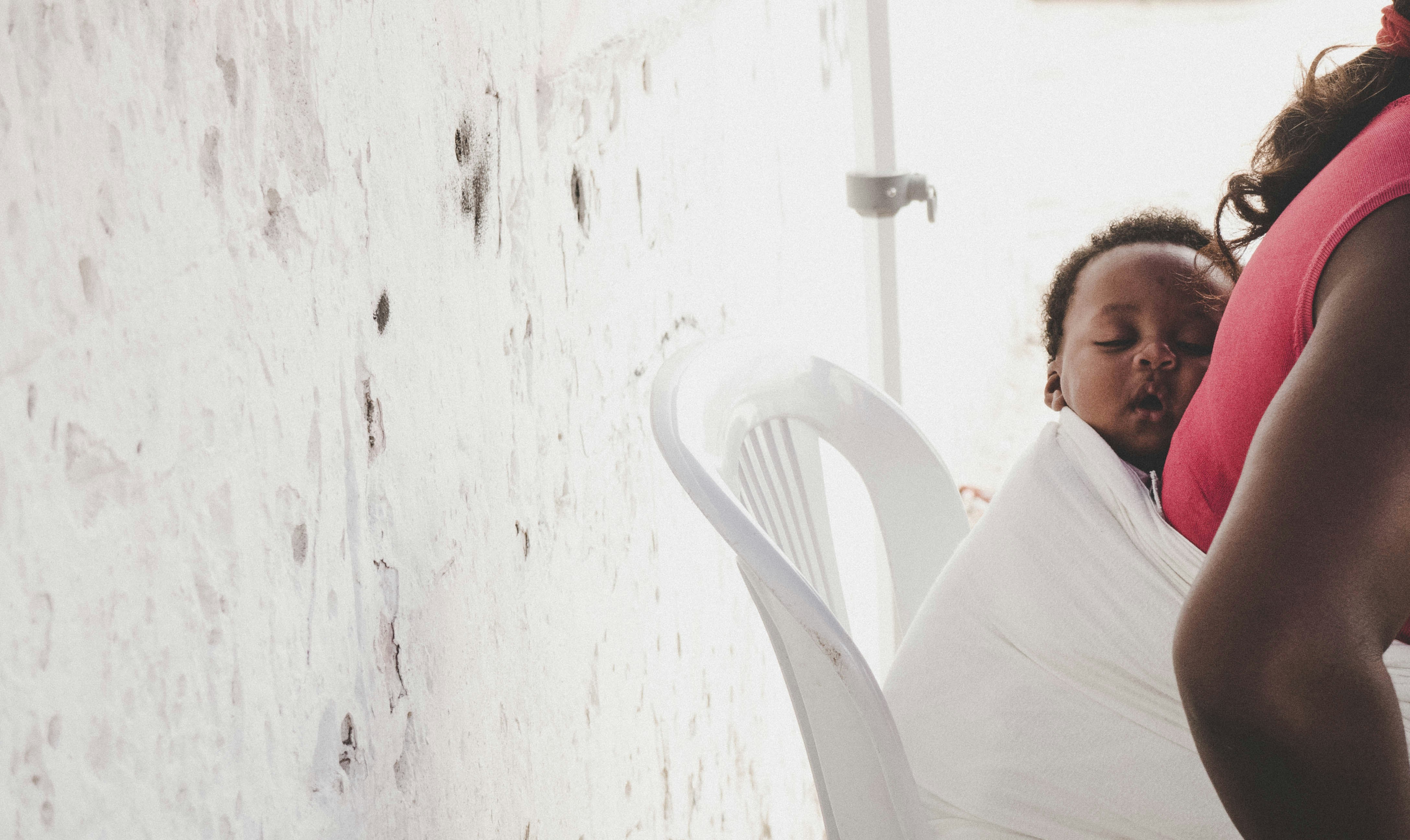
As we mark Maternal Mental Health Awareness Week, let us have a conversation about maternal mental load. What we frequently discuss is the highly visible aspects of motherhood i.e. breastfeeding the baby exclusively for the first six months of life, changing diapers, baby colic and sleepless nights and others. We do not focus as much on the psychological weight of motherhood, the maternal mental load.
The Centre for Mindful Relationships defines maternal mental load as "the invisible, relentless work of emotional and cognitive labour that so many mothers carry silently, day after day."
It is not a new concept, but even though we may be knowing of its existence, we continually fall into the same cycle.
Picture this with me........
You are up early making sure everyone is ready for school and work. You are the one who remembers the doctor's appointments , signs the home work, and knows the location of everything. Everyone comes to you when they miss something including their shoes. You always sense the tension in the house before anyone says a word, because you are absorbing the emotions of everyone else while simultaneously pushing your own needs aside. When you are not physically doing something, your mind is still running. Thinking of that shopping list, worrying, countless reminders going through your mind, and unspoken responsibilities. And when you get the opportunity to relax and breathe for a moment, it is accompanied with guilt over everything you “should” be doing.
There is this belief that we hold as a society when it comes to nighttime parenting. Our patriarchal society believes that all mothers possess a biological superpower that allows them to hear the baby crying at night, while their partners manage to sleep soundly through the noise. It is framed as a magical maternal instinct, an evolutionary trait that makes women inherently better equipped for the grueling midnight shift.
What if this supposed superpower is actually just a socially accepted excuse for an unequal division of household labour?If we think that mothers have a superpower that allows them to hear the baby at night while partners remain blissfully unaware, science has necessary wake-up call for us. According to a recent psychological study published in the journal Emotion, there is virtually no biological difference between how well men and women hear crying babies (2024). Researchers conducted a two-part study to examine this phenomenon. In the first phase, which involved 142 adults without children in Denmark, researchers found that women were only fourteen percent more likely to wake up to a whisper-level sound. However, once the volume increased to the level of a normal baby crying or a standard alarm clock, there was no significant difference between the men and the women. Both sexes possess the same auditory capacity to be jolted awake by the distress call of an infant. Yet, despite this clear equality in hearing, the second phase of the identical research revealed a stark behavioral contrast. When researchers tracked 117 first-time parents over the course of a week, the results conclusively showed that mothers were three times more likely to attend to their babies at night than partners were.
So, if partners can hear the infant just as clearly, why are mothers carrying the majority of the nighttime infant care? The study authors suggest that this discrepancy is not driven by our biology, but rather by deeply ingrained structural and situational factors.
A primary driver is the reality of our standard parental leave policies. Mothers generally take maternity leave significantly earlier and for much longer periods than partners take parental leave. Consequently, mothers gain much earlier, highly concentrated experience in learning how to effectively soothe their babies. By the time a partner might step in to assist, the mother has already become the default household expert, making it seemingly easier and faster for her to just handle the situation rather than waking her partner. Additionally, the reality of breastfeeding means that nursing mothers are frequently the parent who must wake up anyway. Unfortunately, these temporary, situational factors constantly morph into permanent societal expectations.
This disproportionate burden of nighttime caregiving is part of the maternal mental load that can affect maternal mental health. Chronic sleep deprivation is not just an inconvenience for a new mother. It is a severe physiological stressor that increases the risk of postpartum depression, anxiety, maternal burnout. When a mother is forced to bear the entire psychological and physical weight of the night shift for example, her nervous system never truly rests. She remains in a perpetual state of hyper-arousal, constantly anticipating the next cry, which erodes her emotional resilience and impacts her overall well-being. The maternal mental load can be heavy and lonely especially because society tends to write off this exhaustion. We invalidate the very real need for support that most mothers are desperately lacking.
Dismantling the issues of maternal mental load require a radical shift in how we approach parenting partnerships and workplace policies. All of society needs to recognize that nighttime care for example, is not solely a maternal duty dictated by magically sensitive ears. If the baby is crying, partners hear it too, and stepping in is an act of shared partnership. Even if a mother is exclusively breastfeeding, partners can manage the diaper changes, handle the lengthy burping process, and perform soothing so the mother can return to sleep as quickly as possible. It requires men to actively embrace the reality of shared responsibility and for the rest of us as society to shift our norms and beliefs about this.
At Iyashi Wellness Centre, our commitment to maternal mental health is based in providing clinical support and participating in advocacy. In line with this year’s global theme, "A Decade of Voices," our digital campaign this week is dedicated to amplifying the lived experiences of mothers carrying this heavy weight. Beyond the campaign, we offer comprehensive mental health therapy for individual mothers and couples to help them navigate these life transitions. We also have tailored corporate wellness programs designed to protect the well-being of working parents. We invite you to reach out and sign up for our services today. Because when we finally share the load, we actively protect the mother, and a healthy, supported mother is the absolute foundation of a thriving family.
References:
Bi, S., et al. (2024). Hearing not a factor in nighttime baby care. Emotion. https://doi.org/10.1037/emo0001478