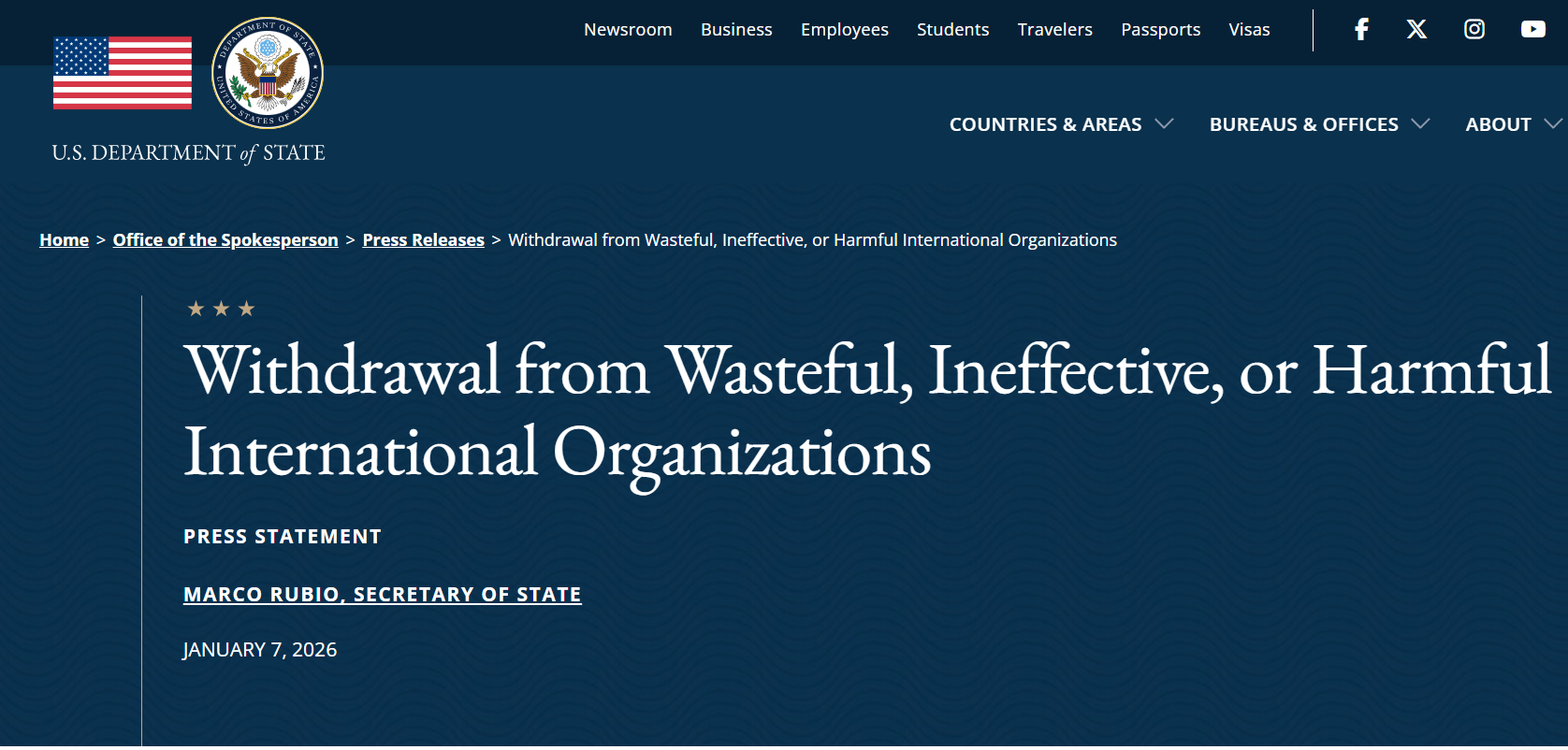
Yesterday, January 7, 2026, Secretary of State Marco Rubio announced the United States’ withdrawal from 66 international organizations. The press statement cited "wasteful, ineffective, or harmful" operations, but for those of us in the development and humanitarian sectors, this translates to something much more visceral.
Pink slips.
If you are reading this with a knot in your stomach, I want you to know: I have been where you are.
Last year at a time like this, during the previous wave of administrative funding cuts, I lost my position as a nutrition consultant. I was mid-career, highly specialized, and suddenly adrift. The stability I thought I had earned through years of service evaporated overnight. I not only lost my paycheck; I felt like I was losing my identity.
But that loss is the reason Iyashi Wellness Centre and Project RISE exist today.
If you are a mid-to-senior career professional (40+) staring down a layoff notice this week, I know that the panic is compounded by the reality of our age. We have mortgages, school fees, and aging parents. We don’t have the same flexibility we had at 25.
I want to share recent insights from the American Psychological Association (APA) and my own journey, to offer you a survival roadmap for navigating this career shock.
1. Grieve the calling and not just the job
Development work is not just a job; it is a vocation. When that is taken away, the grief can be great.
The APA notes that job loss for mid-career professionals can take a huge psychological toll. A recent University of California study found that 11% of older workers who lost jobs experienced high depressive symptoms that they otherwise would not have experienced.
Before you update your CV, you need to process the loss. You are allowed to be angry. You are allowed to be scared. As Dr. Nadya Fouad notes in the Monitor on Psychology, you should examine how you have dealt with previous adversity and remind yourself that you have survived field missions, crises, and complex programmes . You have resilience and the tools you need, you just have to apply them to yourself.
2. The myth of starting over
The biggest lie we tell ourselves in our 40s is: "It’s too late to start over."
Can we reframe this together?
You are not starting from zero; you are starting from experience.
Psychologist and executive coach Dr. Terri Finney suggests creating a wins document where you list your accomplishments not just your duties.
Instead of saying that you managed a programme, remind yourself that you managed complex systems in volatile environments.
Instead of saying that you wrote reports, remind yourself that you synthesized data for high-level stakeholders.
Humanitarians possess many transferable skills ranging from emotional intelligence, systems thinking, crisis management to adaptability. These are the same skills the private sector is desperate for. You are not irrelevant because the funding landscape changed; you are simply misaligned with the current market.
It is time to realign.
3. Beat the overqualified trap and ageism
Ageism is real. Numerous studies have highlighted that older applicants often receive fewer callbacks.
To combat this, pivot your brand by doing the following:
Age-proof your CV by focusing on skills and recent wins rather than listing graduation dates from decades ago.
Embrace the consultant mindset. When I could not find a job, I decided to built one. The gig economy is not just for Gen Z. Your expertise is valuable on a project basis. Organizations may not be hiring full-time directors but they are always hiring short-term experts to solve specific problems.
4. Network like your life depends on it because it does
I am sure its not just me who sucks at networking; and in the humanitarian world, we mostly focus only on networking within our bubble.
Now is the time to break out!
Do not just ask for a job. Ask for perspective. Reach out to connections in the private sector, in tech, in the government. Say yes to things. Join a board. Speak at a local event. Write an article.
Small opportunities like the consulting gigs I took before founding Iyashi are stepping stones. They make you look expansive and active, rather than stagnant and waiting.
5. The pivot to purpose
When the State Department cuts funding, they are cutting a mechanism of delivery, not the need for the work. The problems we solved—malnutrition, mental health, inequality—still exist.
I pivoted from a donor-dependent employee to a social entrepreneur. It was terrifying....it still is. But it gave me control. I stopped waiting for permission to do the work I loved.
If you are facing the end of a contract today, take a breath. This is not the end of your impact. It is just the end of this chapter. The world still needs what you know; you just might have to package it differently.
To my colleagues in the sector: my inbox is open: emily@iyashiwellness.org. Let us figure this out together.