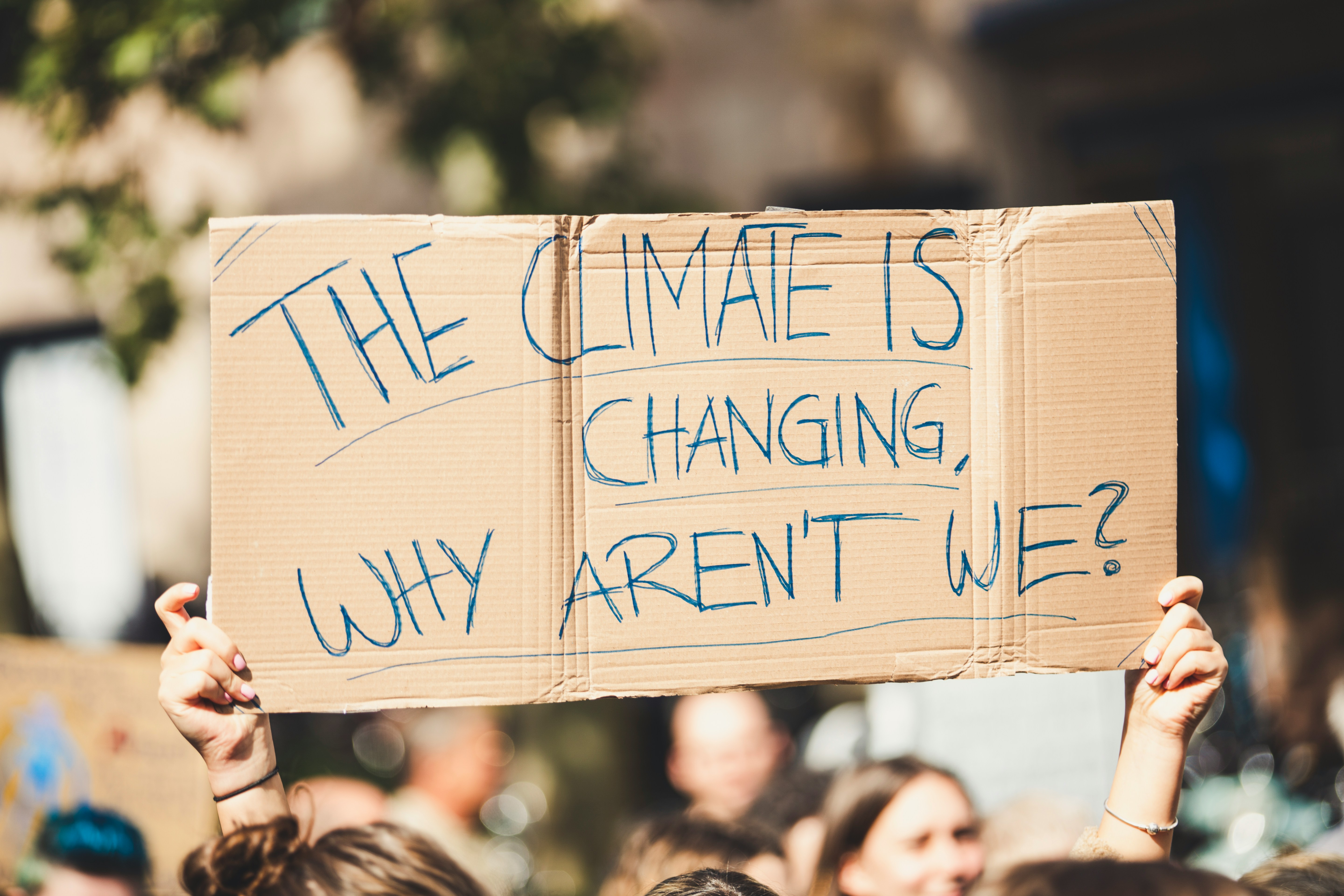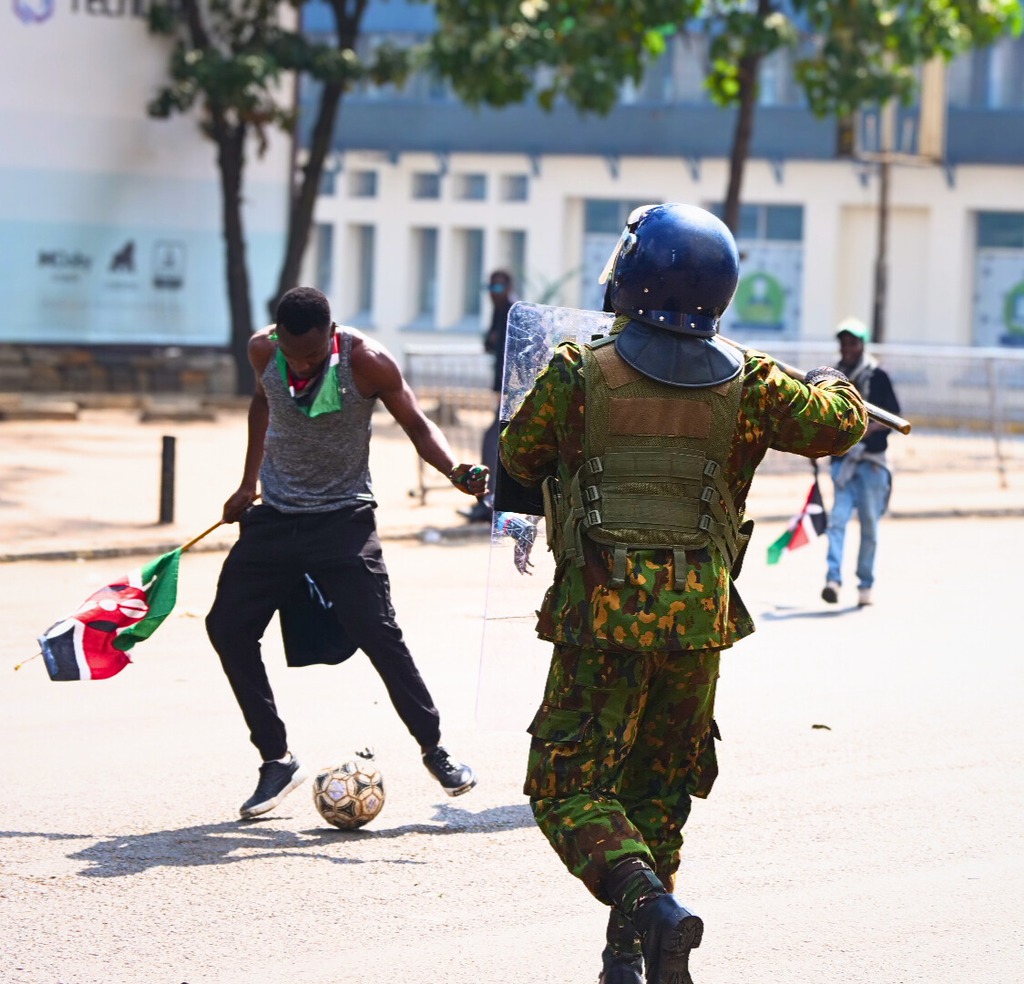
June 25th 2024 is a day that is now forever etched in our memory as Black Tuesday. It was a day when nationwide anti-Finance Bill protests escalated into a violent clash. Thousands of Gen Z-led demonstrators in at least 35 counties opposed the controversial tax legislation which culminated in protesters breaching and partially setting fire to the Parliament buildings. As we mark the anniversary today, my mind goes to the young men who paid the ultimate price during those anti-Finance Bill protests: Rex Masai, Evans Kiratu, Boniface Kariuki, and the many others whose names we must never forget.

We all watched that day. The teargas, the chanting, the absolute, unwavering refusal of Gen Z to back down in the face of live bullets. Regardless of where you stood politically, it was impossible to witness those events without feeling a great sense of awe and pride. Watching ordinary citizens, young men and women transform into human shields made me realize something uncomfortable to say:
True courage is rare, but it is necessary.
You might wonder what a national protest has to do with you. Your daily routine, your job, your marriage, or your mental health. The truth is, while few of us are called to face down riot police, we are all fighting battles on our own personal front lines. The same courage required to demand change on the streets and stare down riot police officer, is the same courage we need to advocate for ourselves in our own lives. That kind of bravery is not just for national movements; it is a skill for everyday life.
As a clinical psychologist, I spend a lot of time in the therapy room at Iyashi Wellness Centre watching people struggle with fear. And I too have struggled with fear in my own life. I have always wanted to understand what it takes to be courageous. Are some people born brave, while the rest of us are doomed to be timid? Or is courage a muscle that can be learned and conditioned? I have been spending a lot of time digging through the latest psychological research and I recently came across something that changed my perspective on what it means to be brave.
First there is the myth we need to debunk. Courage is not fearlessness. We believe that courage means the absence of fear. If your hands are shaking and your voice is cracking, you assume that you are weak. But are you?. Researchers Cynthia Pury and Charles Starkey have spent years studying this dynamic. In their psychological framework, they distinguish between two types of bravery: accolade courage and process courage. Accolade courage is about how an action looks to the outside world. Think of the firefighter running into a burning building looking calm. That is accolade courage. Process courage on the other hand is about how it feels on the inside. It is when the person is terrified, their heart is pounding, but they takes the step anyway.
So this is why it is important for your daily life. If you are terrified to ask for a raise, terrified to leave a toxic relationship, or terrified to set a boundary with an overbearing parent, but you do it anyway—that is the highest form of courage. Fear does not disqualify your bravery; in fact, without fear, courage cannot exist.
So, if we are feeling the fear, how do we push through it? According to a recent dual-process model proposed by Dr. Aakash Chowkase and his colleagues at Yale University, courage is not a random emotional impulse. It is a rapid, internal calculation.
When you face a risk like speaking up against an unethical practice at your work place, your brain immediately weighs two variables in what psychologists call an "approach-avoidance conflict." First, it evaluates efficacy ("Do I have the power to pull this off?"). Second, it evaluates meaning ("Is the end goal worth the risk?").
If the perceived meaning outweighs the perceived risk, you take action. This is empowering because it means we can essentially hack our own courage. Instead of trying to force yourself not to be afraid (which rarely works), you should focus on increasing the meaning of your action. Ask yourself: "If I stay silent, what is the long-term cost to my values, my family, or my self-respect?" When the cost of silence becomes too high, courage takes over.
How does courage play out at the office? Dr. Matt C. Howard, an organizational psychologist, has studied extensively workplace social courage; which he defines as the bravery to risk looking bad, damaging your social standing, or straining a relationship in order to do what is right. His findings are a wake-up call for anyone trapped in a toxic corporate culture. Studies show that employees who exhibit high social courage—those who report unethical behavior, advocate for bullied colleagues, or challenge bad leadership—actually report significantly higher life satisfaction and better overall mental health.
Why? Because swallowing your truth is psychological poison. When you keep suppressing your voice to keep the peace, you are not really keeping the peace; you are harming yourself. Speaking your truth, even when your voice shakes, sets you free.
Finally, there is an often-ignored catalyst for bravery: anger. While we are taught to suppress anger, research suggests that it is a very effective tool. Moral outrage—that deep, visceral anger you feel when you witness an injustice—serves as the main fuel to overcome the inertia of fear. If you feel angry about an injustice at work, or a boundary violation in your home, do not bury it. That anger is your psyche’s way of providing the energy required to overcome your fear of confrontation.
So today, as we honour the memory of Rex Masai and the other brave souls of Black Tuesday, let their legacy be a reminder that courage is not a personality trait reserved for a chosen few. It is a decision you make, over and over again. You might not be on the streets of Nairobi today and you may never be. But you are facing your own front lines. You need the courage to say "No" to an unreasonable client. The courage to admit to your partner that you are overwhelmed. The courage to break a generational cycle.
Whatever your front line is today, remember: you don't have to be fearless. You just have to decide that your truth is more important than your comfort.
References
Chowkase, A. A., Parra-Martínez, F. A., Ghahremani, M., Bernstein, Z., Finora, G., & Sternberg, R. J. (2024). Dual-process model of courage. Frontiers in Psychology, 15, 1376195. https://doi.org/10.3389/fpsyg.2024.1376195
Howard, M. C. (2022). The Effect of Workplace Social Courage on Life Satisfaction: A Scale Adaptation. https://www.researchgate.net/publication/361557867_The_Effect_of_Workplace_Social_Courage_on_Life_Satisfaction_A_Scale_Adaptation
Pury, C. L. S., & Starkey, C. (2010). Is courage an accolade or a process? A fundamental question for courage research. In C. L. S. Pury & S. J. Lopez (Eds.), The psychology of courage: Modern research on an ancient virtue (pp. 67–87). American Psychological Association. https://doi.org/10.1037/12168-004