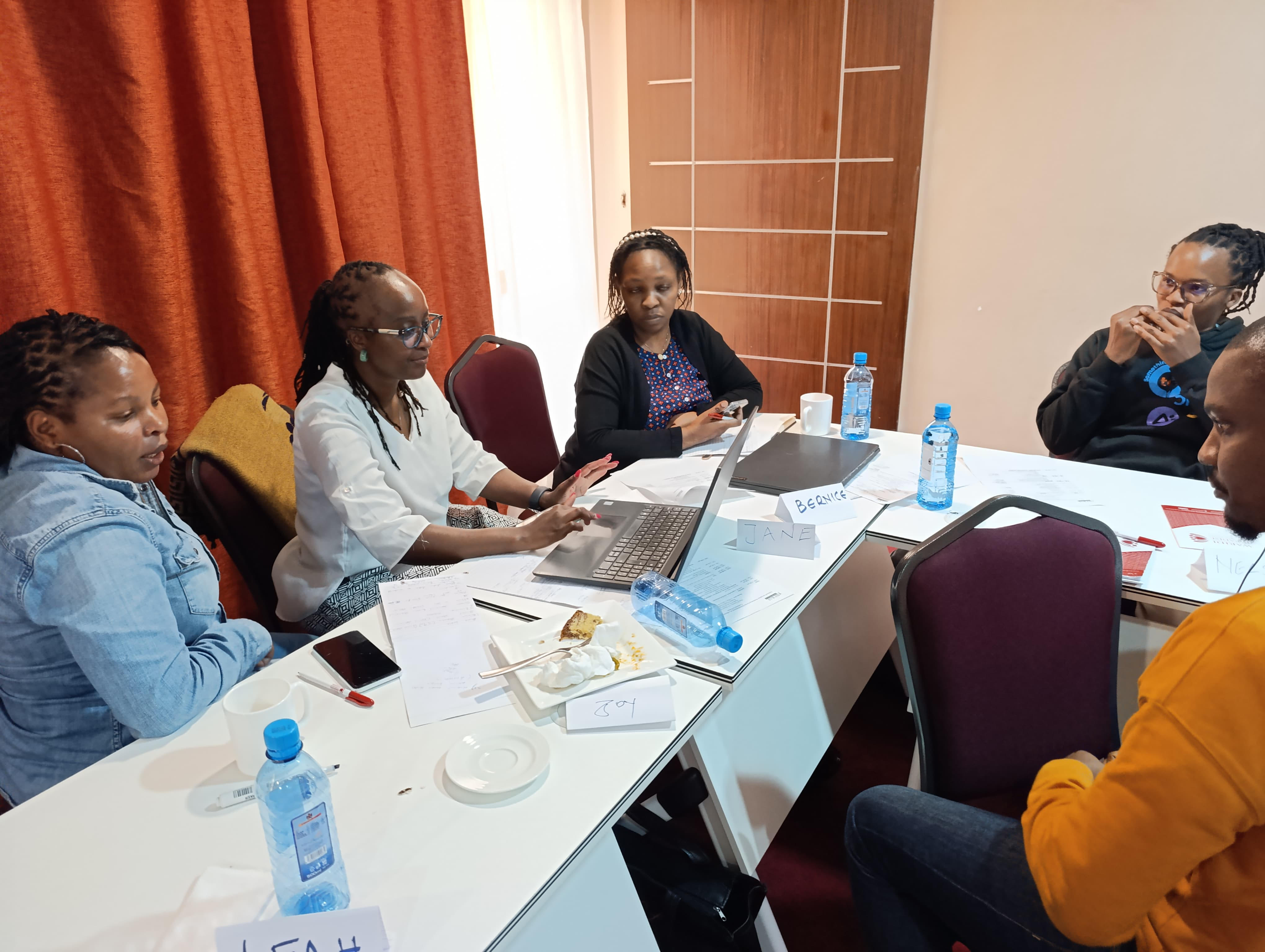
This week, on Monday, March 30, and Tuesday, March 31, 2026, I had the privilege of representing Iyashi Wellness Centre at the National Inception Workshop for the Establishment of a Mental Health Financing Advocacy Coalition in Kenya. The meeting was hosted by the Health Rights Advocacy Forum (HERAF) at Waridi Paradise in Nairobi. It was a two-day convening bringing together civil society organizations, policymakers, and mental health advocates to confront the systemic reality we can no longer afford to ignore: our national mental health crisis and the chronic lack of resources allocated to address it.
The conversations over the two days highlighted a growing multisectoral commitment to improve mental health outcomes in Kenya. In opening remarks, HERAF emphasized that mental health remains one of the most underfunded components of Kenya's health sector despite the increasing burden of mental health conditions and their well-documented social and economic impacts. That said, Kenya has made notable policy commitments, including integration within Universal Health Coverage and the Social Health Insurance Fund. We also have the Kenya Mental Health Policy (2015–2030), which aims for a nation where mental health is valued, promoted, and all affected are treated without stigma.
Despite these frameworks, investment in mental health continues to be inadequate, fragmented, and weakly coordinated. During the workshop we had a presentation by Dr. Jebet Boit from the Ministry of Health’s Division of Mental Health || Ministry of Health. The data she presented laid bare the staggering weight of the mental health burden in Kenya. Currently, one in every four Kenyans will experience a mental health problem in their lifetime. Our clinical systems are heavily impacted, with twenty-five percent of outpatients and forty percent of inpatients showing symptoms of mental illness, primarily depression, anxiety, and substance use. Mental health challenges are not a distant or rare occurrence; in fact, they are woven deeply into the fabric of our society. This is manifesting tragically with our national suicide death rate which stands at approximately 6.1 per 100,000 population.
Beyond the human suffering, the mental health crisis is draining our national economy. According to the Kenya Mental Health Investment Case (2021), mental health conditions cost the Kenyan economy an estimated KES 62.2 billion annually. This translates to a loss of 0.6 percent of the country's Gross Domestic Product. This lost productivity comes from premature mortality, absenteeism, and presenteeism which accounts for the largest share of this annual cost. In spite of these huge economic costs, we continue to allocate less than 0.01 percent of our overall resources to mental health funding.
This severe underinvestment in turn fuels a treatment gap of approximately 75 percent. This is what it means: a majority of Kenyans who desperately need mental health care do not receive it. In addition, we have the issue of unaddressed social determinants of mental health such as poverty, education, housing quality, and social inequality that continue to drive the crisis, while stigma, discrimination, and poor referral pathways leave patients lost in the margins.
The good news is that we now have the legal framework to demand better. The Mental Health Act of 2023 strengthens the rights of persons living with mental illness, prioritizes community-based care, and establishes proper governance structures. Further, the Ministry of Health, Kenya is focusing on strategic priority actions, such as enhancing access to comprehensive, high-quality mental healthcare services at all levels, strengthening leadership, and championing promotive and preventive mental health initiatives.
That said, while policies and legal frameworks are good, they alone cannot heal a nation. As we sat in the room we all acknowledged an important fact: we cannot continue to work in silos if we hope to overcome a 75 percent treatment gap. Overcoming this gap requires a united, coordinated front, which is why this financing advocacy coalition was established to influence national and county-level budgeting. As a mental health community, alongside the corporate sector and civil society, we must answer the call to collaborate.
My takeaway and call to action to all organizations and advocates of mental health is this. We have to step up and align our initiatives with the National Mental Health Policy and priority actions. We must stop pouring energy into fragmented, parallel projects and instead invest in sustainable, system-strengthening interventions. We need to actively support data systems for measurable impact and accountability while strengthening county-level implementation capacity.
Most importantly, I urge you and every reader to champion rights-based, person-centered mental health services in every room you enter. Together, through coordinated advocacy and sustained investment, we can achieve the highest standard of mental health for all Kenyans. Reach out to Iyashi Wellness Centre today to learn how you or your organization can become part of this change, or book a consultation with our team to explore how we can support your workplace's mental health journey.